
Durian

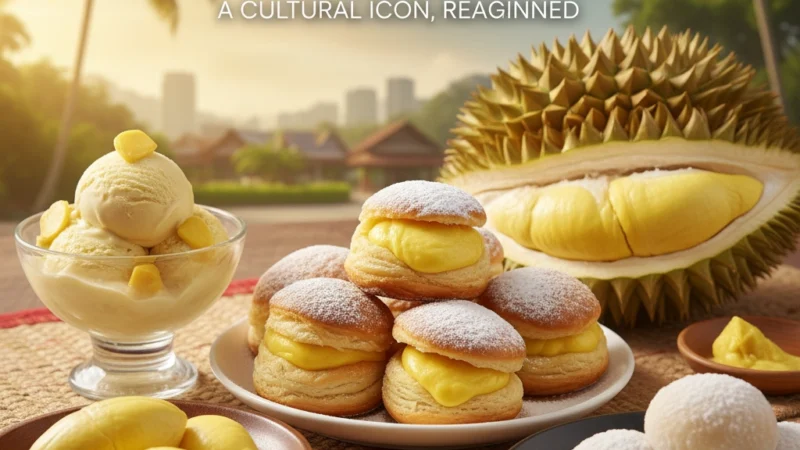
Raja Buah
Durian, famously crowned as “Raja Buah” or “King of Fruits” in Malaysia, is more than just a tropical delicacy — it’s a national icon. Revered for its distinctive aroma and creamy texture, this fruit embodies Malaysia’s rich biodiversity and culinary daring. Despite its polarizing scent, durian remains a cherished part of Malaysian culture, celebrated through festivals, cuisines, and exports worldwide.
Durian – The King of Fruits Malaysia
In Malaysia, durian isn’t just a fruit; it’s a cultural icon. Malaysians have mastered the art of turning durian into treats like puffs, Ice Creams, Curries and many more.
Origin
Durian (Durio zibethinus) is native to the rainforests of Borneo and Sumatra, spreading across Malaysia, Indonesia, Thailand, and the Philippines. Malaysia remains one of the world’s premier durian producers, with over 200 registered varieties, many of which are cultivated in Pahang, Johor, and Penang.
Category
Scientific Name: Durio zibethinus
Family: Malvaceae
Category: Tropical native fruit
Type: Seasonal (May to August)
Appearance

Durian is large and oval, typically 20–30 cm long, with a thick green or yellowish-green spiky rind. Inside are soft, golden-yellow pods of creamy, aromatic flesh divided by fibrous white walls. The outer thorns resemble a medieval weapon, yet the inside reveals a custard-like delicacy prized by locals and tourists alike.
Popular Varieties of Malaysian Durian
| Variety | Local Name | Distinctive Features | Region |
|---|---|---|---|
| Musang King | D197 | Deep yellow flesh, bitter-sweet, creamy texture | Pahang, Johor |
| Black Thorn | D200 | Reddish-gold flesh, rich and buttery | Penang |
| D24 | Sultan | Balanced sweetness and bitterness | Pahang |
| XO | XO Durian | Strong alcoholic aroma, pale flesh | Johor |
| Red Prawn | Udang Merah | Orange flesh, sweet and soft | Penang |
| Tekka | D160 | Thick flesh, complex flavor | Johor |
| Kampung Durian | – | Wild or naturally grown durian | Nationwide |
Preparation
Durian is enjoyed in multiple ways:
- Fresh: Eaten straight from the husk, often with gloved hands.
- Desserts: Used in ice creams, cakes, pastries, pancakes, and cendol durian.
- Traditional Cuisine: Made into tempoyak (fermented durian paste) used in curries and sambal.
- Beverages: Blended into smoothies, milkshakes, and coffee.
Equipment
- Parang or heavy knife for cutting open the thorny shell.
- Gloves or thick cloth to handle safely.
- Plate or banana leaf for serving.
Durian Taste
Durian’s flavor is an extraordinary blend of sweet, creamy, and slightly bitter notes, often compared to almonds, caramel, and custard with hints of onion or garlic. Its complexity varies by variety — Musang King offers a refined bittersweet richness, while Red Prawn delivers syrupy sweetness.
Texture
The flesh is silky, buttery, and velvety, melting in the mouth. Each pod contains a large seed encased in the luscious pulp.
Durian Aroma
Durian’s legendary aroma is both infamous and adored — a potent fusion of sulfur, sweetness, and tropical intensity. While banned in many hotels and public transport systems, true aficionados call it the “perfume of paradise.”
Cultural Significance
Durian holds deep cultural roots in Malaysia:
- Symbolizes wealth, fertility, and celebration.
- Shared among family and friends during harvest season as a gesture of unity.
- Annual Durian Festivals in Pahang and Penang attract thousands of enthusiasts.
- Served during Hari Raya festivities and village gatherings.
Regional Cultivation
| State | Famous For | Harvest Period |
|---|---|---|
| Pahang (Raub, Bentong) | Musang King (D197) | June – August |
| Penang (Balik Pulau) | Red Prawn, Black Thorn | May – July |
| Johor (Segamat, Muar) | D24, Tekka, XO | June – September |
| Perak (Gopeng, Tanjung Malim) | Kampung Durian | May – August |
| Sabah & Sarawak | Wild Durian (Durio graveolens) | November – January |
Social Context
Eating durian is a communal experience in Malaysia. Locals gather at roadside durian stalls and pasar malam (night markets) to enjoy the fruit fresh from the husk. “Durian buffets” — offering all-you-can-eat experiences — are popular during harvest season.
Nutritional Information (per 100g)
| Nutrient | Value |
|---|---|
| Calories | 147 kcal |
| Carbohydrates | 27.1 g |
| Protein | 1.5 g |
| Fat | 5.3 g |
| Fiber | 3.8 g |
| Vitamin C | 19.7 mg |
| Potassium | 436 mg |
| Magnesium | 30 mg |
Durian Health Benefits
- Rich in antioxidants — supports immunity and skin health.
- Natural energy booster — high carbohydrate content.
- Improves digestion — high in dietary fiber.
- Contains tryptophan — enhances mood and sleep.
Dietary Restrictions
- Should be consumed in moderation due to its high calorie and sugar content.
- Not advisable with alcohol, as it may cause bloating or discomfort.
- Diabetics should avoid overconsumption.
Allergens
Durian rarely causes allergies but may trigger mild sensitivity due to its strong sulfur compounds in some individuals.
Durian Cost by Varieties
| Type | Average Price (per kg) |
|---|---|
| Musang King | RM 60 – RM 80 |
| Black Thorn | RM 70 – RM 100 |
| D24 | RM 40 – RM 60 |
| Kampung Durian | RM 20 – RM 35 |
**Prices vary by season and market demands.
Production & Export
Malaysia is a global durian powerhouse, exporting premium frozen durians, pulp, and processed desserts primarily to China, Singapore, and Hong Kong. The Musang King variety (D197) is a national export champion, contributing millions annually to the agri-tourism sector.
Symbolism
Durian represents boldness, authenticity, and luxury — a fruit that commands respect and curiosity alike. It encapsulates Malaysia’s philosophy: rich, layered, and unforgettable.
Here’s a Durian Malaysia FAQ — structured and optimized for publication (ideal for MyTrip My or travel/tourism pages).
FAQ about Durian
1. What is Durian?
Durian is a tropical fruit native to Southeast Asia, widely known as the “King of Fruits” due to its distinctive aroma, creamy texture, and bold flavor. It’s highly popular in Malaysia, Thailand, and Indonesia.
2. Why is Durian called the “King of Fruits”?
The title comes from its majestic size, rich taste, and cultural significance. It’s often regarded as a royal fruit due to its premium value and unique flavor that stands above all others in tropical fruit culture.
3. Where can I find the best durians in Malaysia?
Malaysia’s most famous durian-producing areas include:
- Raub, Pahang – Home of the legendary Musang King
- Balik Pulau, Penang – Known for Red Prawn and D24 varieties
- Bentong, Johor, and Perak – High-quality durian plantations
4. What are the most popular types of Malaysian durian?
Common varieties include:
- Musang King (D197) – Creamy, rich, and slightly bitter-sweet
- D24 (Sultan Durian) – Balanced and smooth flavor
- Red Prawn (Udang Merah) – Sweet and soft texture
- XO Durian – Alcohol-like aftertaste, perfect for connoisseurs
5. When is durian season in Malaysia?
Typically, June to August is peak season, with a secondary season from November to January in some regions.
6. Can tourists try durian in public places?
Many hotels and public transport systems prohibit durians due to their strong smell. However, tourists can enjoy durian at specialized durian stalls, farms, or durian buffets across Malaysia.
7. How is durian eaten?
Durian is enjoyed fresh, straight from the husk. It’s also used in desserts, pastries, ice creams, cakes, and even coffee. Many locals pair it with sticky rice or coconut milk.
8. Is durian healthy?
Yes — durian is packed with vitamin C, potassium, fiber, and healthy fats, though it’s high in calories. Moderation is key.
9. What is the Durian Museum in Malaysia?
The Durian Museum (Muzium Durian) in Bentong, Pahang celebrates the fruit’s legacy, showcasing durian species, history, and cultural impact. It’s a must-visit for fruit lovers.
10. Can durian be exported or brought back home?
Yes, but only frozen or vacuum-packed durians are allowed for export due to aroma restrictions on airlines and customs.
11. Why do some people dislike durian?
Its pungent smell can be overwhelming for first-timers — often described as a mix of strong cheese and onion. Yet, for locals, that scent is pure delight.
12. Are there durian festivals in Malaysia?
Absolutely! The Malaysia Durian Festival and regional Durian Fiestas in Penang, Pahang, and Johor celebrate the fruit through tasting sessions, contests, and cultural showcases.
13. How much does durian cost in Malaysia?
Prices vary by type and season:
- Musang King: RM 50–120/kg
- D24: RM 25–45/kg
- Red Prawn: RM 30–60/kg
14. Can I visit a durian farm?
Yes, Malaysia offers durian farm tours in Raub, Penang, and Johor where visitors can taste, learn, and even pick durians fresh from the trees.
15. Is it safe to eat durian with alcohol or coffee?
Traditional belief advises against mixing durian with alcohol or caffeine, as it may cause discomfort due to high sulfur content affecting digestion and metabolism.
Durian is a tropical fruit from Southeast Asia known for its spiky exterior and strong, distinctive smell, earning it the nickname “King of Fruits”. Don’t miss to try this fruit during your visit to Malaysia.


Comments are closed.