
Rendang

Malaysian Food
Rendang is a fried meat or dry curry made of meat stewed in coconut milk and spices, widely popular across Indonesia, Malaysia, Singapore, the Philippines and Brunei, where each version is considered local cuisine.
Origin
Minangkabau ethnic group, West Sumatra, Indonesia; popular across Malaysia, Singapore, and Brunei.
Category
Main Course / Meat Dish
Appearance
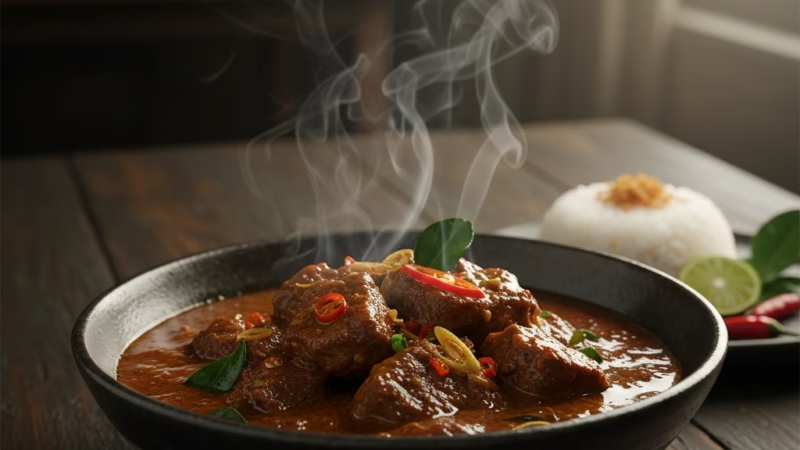
Dark brown to deep reddish-brown beef cubes coated in thick, rich, semi-dry or dry sauce with visible coconut residue and spice particles.
Ingredients
- Beef (chuck or brisket, cubed)
- Coconut milk
- Lemongrass
- Galangal and ginger
- Garlic and shallots
- Turmeric leaves (optional)
- Chili peppers
- Kaffir lime leaves
- Coriander, cumin, and other spices
- Tamarind paste or lime juice
Preparation
Slow-cooked beef simmered in a spice paste and coconut milk for several hours until tender, with sauce reduced to coat the beef.
Equipment
- Heavy-bottomed pot or wok
- Mortar and pestle or blender for spice paste
- Stirring spoon
Variations
| Rendang Variant | Description |
|---|---|
| Rendang ayam | Chicken rendang |
| Rendang ati ampela | Chicken liver and gizzard rendang |
| Rendang babat | Beef tripe rendang |
| Rendang baluik / belut | Eel rendang |
| Rendang bilih / bilis | Bilis fish rendang (freshwater anchovy from Sumatra) |
| Rendang cubadak / nangka | Unripe jackfruit rendang |
| Rendang cumi | Squid rendang |
| Rendang daging | Beef rendang (or buffalo/goat/mutton) |
| Rendang datuk / rendang kering | Dried beef rendang (meat dried 4 days prior) |
| Rendang daun kayu / samba buruk | Mixed edible leaves rendang with snakehead fish |
| Rendang daun pepaya | Young papaya leaf rendang |
| Rendang dendeng | Beef jerky rendang |
| Rendang gabus | Snakehead fish rendang |
| Rendang gadih / tumbuk | Minced and pounded beef rendang |
| Rendang hati | Cow liver rendang |
| Rendang ikan asap / salai | Smoked fish rendang (often ray fish) |
| Rendang itiak / bebek | Duck rendang |
| Rendang jamur | Mushroom rendang |
| Rendang jantung pisang | Banana blossom rendang |
| Rendang jariang / jengkol | Jengkol bean rendang |
| Rendang kambing | Goat rendang |
| Rendang jo kantang | Beef rendang with baby potatoes |
| Rendang kepiting / ketam | Crab rendang |
| Rendang lele | Catfish rendang |
| Rendang lidah | Beef tongue rendang |
| Rendang limpa | Beef spleen rendang |
| Rendang lokan / tiram | Marsh clam rendang |
| Rendang maco | Salted fish rendang |
| Rendang Medan | Medan-style rendang (fattier, wetter) |
| Rendang Padang | Padang-style dry rendang with lean meat |
| Rendang pakis / pucuk paku | Fern leaf rendang |
| Rendang paru | Cow lung rendang |
| Rendang patin | Catfish (Pangasius) rendang |
| Rendang petai | Petai bean and green bean rendang |
| Rendang pucuak ubi / daun singkong | Cassava leaf rendang |
| Rendang punai | Green pigeon rendang |
| Rendang puyuh | Quail rendang |
| Rendang rawit | Extra-spicy dried rendang condiment |
| Rendang rebung | Bamboo shoot rendang |
| Rendang runtiah / suir | Shredded beef/poultry rendang |
| Rendang sapuluik itam / pulut hitam | Black sticky rice dough rendang |
| Rendang selais | Selais catfish rendang |
| Rendang tahu | Tofu rendang |
| Rendang talua / telur | Egg rendang |
| Rendang tempe | Tempeh rendang |
| Rendang teri | Anchovy rendang |
| Rendang tongkol | Mackerel tuna rendang |
| Rendang tuna | Tuna rendang |
| Rendang tunjang / kikil | Cow tendon/cartilage rendang |
| Rendang ubi | Cassava rendang |
| Rendang udang | Shrimp rendang |
| Rendang usus | Intestine rendang (cow/poultry intestines) |
Taste
Savory, mildly sweet, spicy, and richly aromatic.
Texture
Tender, melt-in-the-mouth beef with slightly fibrous strands, coated in thick sauce.
Aroma
Fragrant combination of lemongrass, galangal, kaffir lime, chili, and slow-cooked coconut milk.
Sound
Gentle simmering during cooking; soft sizzling when frying the spice paste initially.
Cultural Significance
Served during festivals, weddings, and family gatherings; symbolizes patience and communal effort.
Symbolism
Represents tradition, skill, and cultural identity of Minangkabau people.
Regional Cuisine
Widely served in Indonesia, Malaysia, Singapore, and Brunei with regional spice variations.
Social Context
A dish of respect, hospitality, and celebration in households and restaurants alike.
Nutritional Information
- High in protein and fat
- Moderate in calories
- Vitamins and minerals from beef and spices
Health Benefits
- Protein-rich for muscle growth and energy
- Anti-inflammatory effects from turmeric, ginger, and chili
- Healthy fats from coconut milk in moderation
Dietary Restrictions
Not suitable for vegetarians or those avoiding beef or high-fat foods.
Allergens
Coconut, spices, and occasionally nuts if added.
Cost
Moderate to high, depending on beef quality and spices.
Production
Traditionally prepared in households or specialty restaurants; also available in packaged, ready-to-eat form.
Sustainability
Using local beef and organic spices supports sustainability; coconut-based sauces are eco-friendly.
Availability
Found in traditional Malaysian and Indonesian restaurants worldwide; available in supermarkets as packaged rendang.
History
Originated in Minangkabau culture as a preservation method for meat. Slow cooking prevents spoilage and enhances flavor; centuries-old culinary tradition.
Anecdotes
Minangkabau warriors reportedly carried rendang on long journeys because it lasted several days; now a symbol of celebration and culinary pride.
How to Prepare
- Blend spices into a paste.
- Brown beef in oil; add spice paste.
- Add coconut milk; simmer on low heat for several hours.
- Stir occasionally until sauce thickens and beef is tender.
- Serve with steamed rice or rice cakes (ketupat).
FAQ
Q: Can Rendang be frozen?
Yes, it freezes well and retains flavor.
Q: Can I adjust the spice level?
Absolutely; reduce or increase chili according to preference.
Q: Can I cook Rendang in a slow cooker?
Yes, cook on low for 6–8 hours for tender beef.




Comments are closed.