
Istana Iskandariah

Synopsis
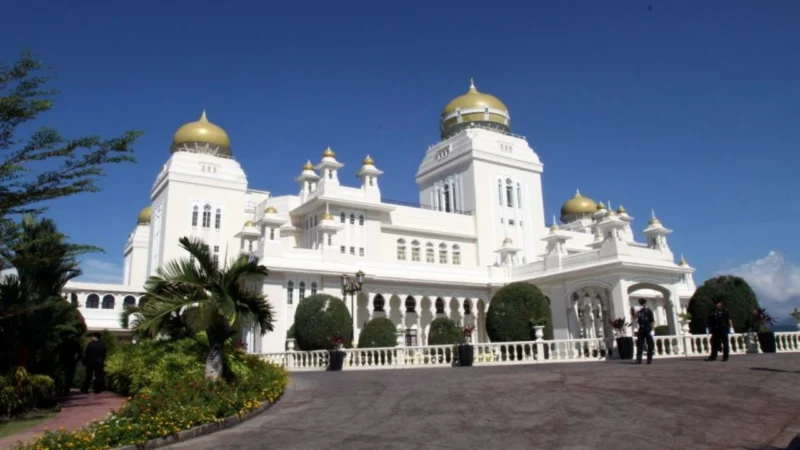
Nestled in the royal town of Kuala Kangsar, Istana Iskandariah stands as a magnificent symbol of Perak’s monarchy. With its grand golden domes, regal architecture, and lush surroundings by the Perak River, the palace remains a striking emblem of Malaysia’s royal heritage and cultural grandeur.
Overview
Built in 1933, Istana Iskandariah serves as the official residence of the Sultan of Perak. The palace is located in Bukit Chandan, Kuala Kangsar, a historic royal enclave renowned for its heritage charm. Named after Sultan Iskandar Shah (1918–1938), this majestic structure embodies the dignity and continuity of Perak’s royal lineage.
The palace’s grandeur, coupled with its historical depth, makes it one of Malaysia’s most important heritage landmarks and a remarkable example of Malay-Islamic architecture infused with colonial influences.
Castle Quick Facts
- Name: Istana Iskandariah
- Location: Bukit Chandan, Kuala Kangsar, Perak
- Built: 1933
- Type: Royal Palace
- Architectural Style: Indo-Saracenic and Moorish with Malay elements
- Key Feature: Golden domes and scenic riverside views
- Significance: Official residence of the Sultan of Perak
Location
Istana Iskandariah is strategically located on Bukit Chandan hill, overlooking the Perak River. Its elevated position not only offers a panoramic view of Kuala Kangsar but also symbolizes the palace’s status as a royal and cultural beacon in the region.
Castle Ticket Prices
The palace is not open to the public as it is an active royal residence. However, visitors can admire its exterior architecture and surrounding scenery from designated public areas nearby, including viewpoints along Bukit Chandan.
History
The construction of Istana Iskandariah began in 1931 and was completed in 1933, succeeding the old Istana Negara in Bukit Chandan. Commissioned during the reign of Sultan Iskandar Shah, the palace was intended to serve as a symbol of modernization and royal prestige in the early 20th century.
Over the decades, it has hosted countless royal ceremonies, coronations, and state functions, making it a cornerstone of Perak’s monarchy.
Architectural Highlights
Istana Iskandariah’s design masterfully blends Islamic, Moorish, and colonial architectural styles.
- Its golden domes and whitewashed façade stand out amid lush greenery.
- The arched verandas and intricate latticework reflect both Malay craftsmanship and British colonial influence.
- The main hall (Balairong Seri) is adorned with crystal chandeliers, royal insignia, and ornate furniture, exuding regal opulence.
Legends & Mysteries
According to local lore, the palace’s design incorporates symbolic numerology, reflecting the unity between the royal family, religion, and the people. The domes are said to represent the nine Malay states that form Malaysia’s traditional royal hierarchy.
Visiting Information
While entry to the palace itself is restricted, visitors can explore nearby attractions like Masjid Ubudiah, one of Malaysia’s most beautiful mosques, and Istana Kenangan, a unique wooden palace museum that once served as a royal residence.
Things to Do
- Capture photographs of the palace’s golden domes from Bukit Chandan.
- Visit Masjid Ubudiah, located just a short walk away.
- Explore Royal Museum Kuala Kangsar (Istana Kenangan).
- Enjoy riverside walks and heritage tours around Kuala Kangsar town.
Nearby Attractions
- Masjid Ubudiah – Iconic mosque with marble domes.
- Istana Kenangan – The old royal palace, now a museum.
- Victoria Bridge – Historic steel railway bridge.
- Kuala Kangsar Clock Tower – Colonial landmark.
- Perak Royal Museum – Displays royal artifacts and history.
How to Reach Castle
- By Car: Kuala Kangsar is about 3 hours’ drive from Kuala Lumpur via the North–South Expressway (E1).
- By Train: KTM ETS services connect Kuala Lumpur to Kuala Kangsar Railway Station, from where local taxis or Grab rides can take you to Bukit Chandan.
- By Bus: Intercity buses operate from Ipoh and Taiping to Kuala Kangsar town centre.
Frequently Asked Questions (FAQ)
Q1: Can visitors enter Istana Iskandariah?
No, the palace is a functioning royal residence and not open to public tours. Visitors can, however, enjoy exterior views from nearby areas.
Q2: What is the main attraction near Istana Iskandariah?
The nearby Masjid Ubudiah and Istana Kenangan are major tourist highlights.
Q3: When is the best time to visit Kuala Kangsar?
The best time to visit is during the dry season (March to August) when outdoor exploration is more pleasant.
Q4: What makes Istana Iskandariah unique?
Its golden domes, fusion architecture, and royal heritage make it one of Malaysia’s most photographed and historically significant palaces.


Comments are closed.