
Flight Ticket: Kuala Lumpur To Hong Kong Capacity Review

Introduction
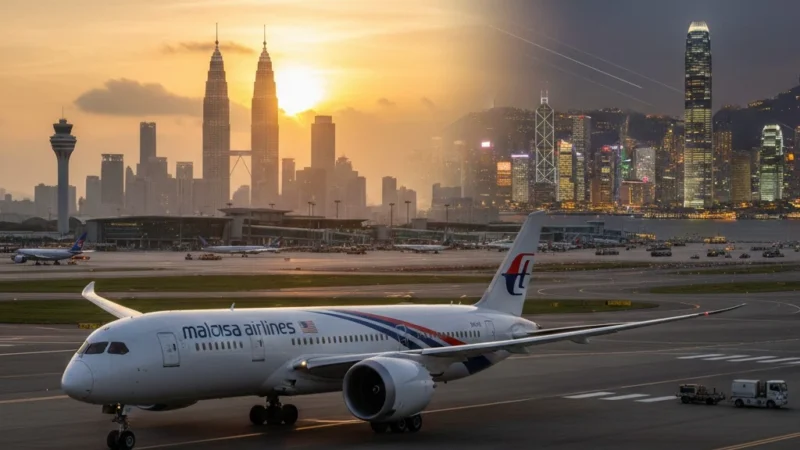
The Kuala Lumpur (KUL)–Hong Kong (HKG) corridor is one of Southeast Asia’s most strategically important air routes. With Hong Kong International Airport (HKIA) expanding its capacity via the three-runway system (3RS), airlines like Malaysia Airlines, Cathay Pacific, AirAsia, and Batik Air are optimizing connectivity, frequency, and operational efficiency. This article reviews route capacity, ticket details, and frequently asked questions to help travelers and airline operators maximize hub-to-hub efficiency.
KL–Hong Kong Route Overview
Airlines and Flight Frequencies
- Cathay Pacific: ~3 daily flights using A330, A321neo, or 777 aircraft.
- Malaysia Airlines: Morning and evening flights using 737-MAX / 737-800.
- AirAsia: Offers several weekly flights, ideal for budget travelers.
- Batik Air: Additional direct flights to meet growing demand.
Hong Kong Airport Capacity
- Three-Runway System (3RS) allows higher flight throughput and cargo handling.
- 2024/25 statistics: 54.9 million passengers, 373,050 flight movements.
- Strong cargo and transit capabilities support both full-service and low-cost carriers.
KUL → HKG Flight Ticket
| Airline | Flight No. | Departure (KUL) | Arrival (HKG) | Aircraft | Class | Approx. Price (USD) |
|---|---|---|---|---|---|---|
| Cathay Pacific | CX 720 | 08:20 | 12:10 | A330 | Economy / Business | 280–850 |
| Cathay Pacific | CX 724 | 13:10 | 17:00 | 777 | Economy / Business | 280–850 |
| Malaysia Airlines | MH 72 | 09:15 | 13:05 | 737-800 | Economy / Business | 250–750 |
| Malaysia Airlines | MH 78 | 18:30 | 22:20 | 737-MAX | Economy / Business | 250–750 |
| AirAsia | AK 718 | 07:50 | 11:40 | A320 | Economy | 120–200 |
| Batik Air | ID 456 | 14:00 | 17:50 | A320 | Economy | 150–250 |
Note: Prices are indicative and may vary depending on season, booking date, and fare class.
Maximising Hub-to-Hub Efficiency
Key Strategies
Strategic Transit Planning
Utilize Hong Kong as a transit hub to connect Southeast Asia to Europe, North America, and other Asian destinations.
Fleet & Frequency Optimization
- Large aircraft (A330, 777) for peak periods.
- Smaller aircraft (A321neo, 737-MAX) for off-peak or medium-demand slots.
Cargo Integration
- Utilize belly cargo to increase revenue.
- Consider dedicated cargo flights on high-demand periods.
Revenue Management
- Balance full-service and low-cost carriers.
- Implement dynamic pricing and ancillary revenue streams.
Risk Mitigation RiskMitigationOvercapacityAdjust frequency and deploy smaller aircraftSlot congestionNegotiate optimal slots with HKIACost pressuresOptimize fleet utilization, integrate cargoDemand volatilityFlexible scheduling and marketing promotions
FAQs: KL–Hong Kong Flights
Q1: How long is a direct flight from Kuala Lumpur to Hong Kong?
A: The average flight duration is approximately 4 hours, depending on the aircraft and route.
Q2: Which airlines offer the best value for KL–HK flights?
A: For budget travelers, AirAsia is the most economical. For full-service options with transit benefits, Cathay Pacific and Malaysia Airlines are ideal.
Q3: How many direct flights operate daily?
A: Approximately 6–8 daily direct flights operate between KL and HK, including low-cost and full-service carriers.
Q4: Can I book connecting flights beyond Hong Kong efficiently?
A: Yes, Hong Kong serves as a major hub, allowing seamless connections to North America, Europe, and other Asian cities.
Q5: Is cargo available on passenger flights?
A: Yes, airlines integrate belly cargo on passenger flights, and dedicated cargo services are available via HKIA.
Q6: When is the best time to book for cheaper fares?
A: Typically 1–3 months in advance for economy class. Avoid peak holiday periods for the best deals.
Conclusion
The KL–Hong Kong route continues to thrive as a key hub-to-hub corridor in Asia. With enhanced airport capacity, strategic scheduling, and the right mix of fleet deployment and revenue management, airlines can maximize efficiency while providing excellent connectivity for passengers. Whether traveling for business, transit, or leisure, understanding schedules, ticket options, and transit strategies ensures a smooth journey on this dynamic route.



Comments are closed.