
Cucur Udang

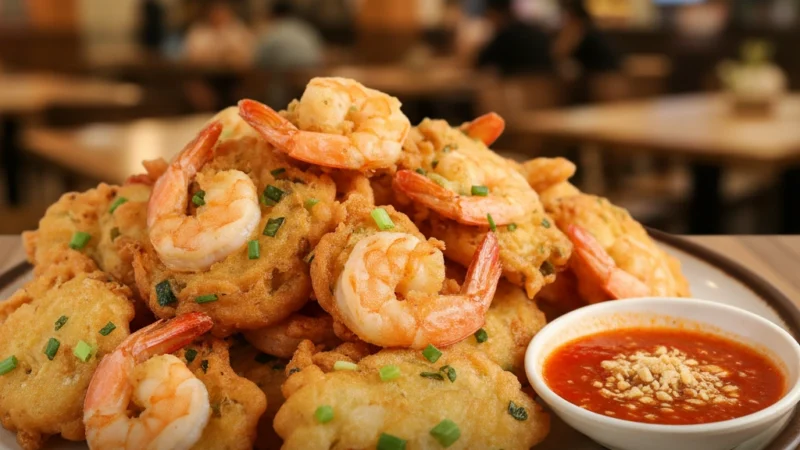
Cucur udang are popular Malaysian prawn fritters, a common street food and tea-time snack in Malaysia and Singapore. These fritters are known for their crunchy exterior and soft interior, and are typically made with a batter of flour, water, and various ingredients like fresh prawns, bean sprouts, chives, and onions, then deep-fried until golden brown.
Cucur Udang, also known as Malaysian prawn fritters, is a crispy, savory snack that holds a cherished place in Southeast Asian street food culture. Found across Malaysia, Singapore, and Indonesia, it’s a deep-fried delicacy featuring prawns embedded in a golden, fluffy batter. Typically served with spicy peanut or chili sauce, this humble fritter captures the heart of local culinary tradition.
Origin
Cucur Udang originates from the Malay Peninsula, where coastal communities combined seafood with local spices and flour to create quick, energy-rich snacks. It’s believed to have evolved from traditional “cucur” (fritter) recipes popular during the colonial era, influenced by Chinese and Indian street vendors.
Category
Street Food / Snack / Appetizer
Appearance
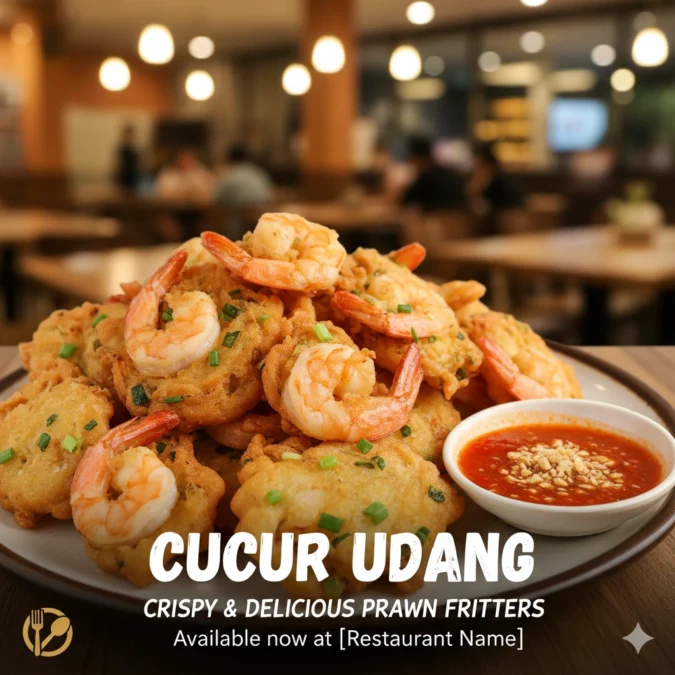
Golden-brown, round fritters with small prawns visibly perched on the surface. The edges are crisp, while the center remains soft and fluffy. Often garnished with green chilies or cucumber slices when served.
Ingredients
- Fresh prawns (small to medium-sized)
- All-purpose flour
- Rice flour (for extra crispiness)
- Baking powder
- Turmeric powder
- Chopped chives or spring onions
- Bean sprouts
- Water
- Salt and sugar to taste
- Cooking oil for deep frying
Optional: chili flakes, garlic, or onion paste for added flavor.
Preparation
- Mix dry ingredients (flour, baking powder, salt, sugar, turmeric).
- Gradually add water until a thick batter forms.
- Stir in chopped chives and bean sprouts.
- Spoon batter into hot oil, topping each portion with one or two prawns.
- Deep-fry until golden brown and crisp.
- Drain on paper towels before serving with chili sauce.
Equipment
- Mixing bowl
- Deep frying pan or wok
- Slotted spoon
- Paper towels
- Ladle or scoop
Variations
- Cucur Udang Borneo – uses larger prawns with spicy batter.
- Cucur Sayur – adds vegetables like shredded carrots and onions.
- Cucur Udang Kecil – bite-sized version for festive gatherings.
- Cucur Udang Penang-style – served with a thick, sweet-spicy peanut sauce.
Taste
A perfect balance of savory, slightly sweet, and subtly briny flavors from the prawns. The batter delivers a comforting warmth from turmeric and salt.
Texture
Crisp exterior with a fluffy, chewy center. The prawns add a satisfying bite and juiciness that complements the fried batter.
Aroma
Rich and appetizing — a combination of fried seafood, turmeric, and toasty flour. The aroma is both nostalgic and mouthwatering, evoking memories of bustling evening markets.
Sound
The signature crackle and sizzle when batter hits hot oil signals a perfect Cucur Udang in the making — an unmistakable sound of Malaysian street food culture.
Cultural Significance
Cucur Udang is more than a snack; it’s a community connector. Commonly sold in pasar malam (night markets) and hawker stalls, it’s enjoyed during Ramadan bazaars, family gatherings, and tea-time breaks. Its affordability and universal appeal make it a symbol of Malaysian togetherness.
Symbolism
Represents unity in diversity — the blending of Malay, Chinese, and Indian culinary influences into a single, harmonious bite. The circular shape symbolizes wholeness and communal sharing.
Regional Cuisine
Popular in Penang, Perak, and Sabah, each region offers its unique interpretation, often tied to local produce and spice profiles. In Penang, it’s iconic in coastal food courts.
Social Context
Often enjoyed during afternoon tea with family or sold as street food in open markets. It’s also a staple for festive events, symbolizing warmth and hospitality.
Nutritional Information (per serving, approximate)
- Calories: 280 kcal
- Protein: 12 g
- Carbohydrates: 25 g
- Fat: 15 g
- Fiber: 1 g
- Sodium: 320 mg
Health Benefits
- Source of protein from prawns
- Contains minerals like iodine and selenium
- Turmeric adds natural anti-inflammatory properties
- Moderate portion provides quick energy
Dietary Restrictions
- Non-vegetarian (contains prawns)
- Can be modified for vegetarians by substituting prawns with tofu or vegetables
Allergens
- Shellfish (prawns)
- Gluten (from wheat flour)
- Possible cross-contamination if fried in shared oil
Cost
Budget-friendly snack — typically RM 1.50–RM 3.00 per piece in Malaysia, depending on size and location.
Production
Commonly made in small batches by hawkers. The batter is prepared fresh each morning, and fritters are fried continuously throughout the day to maintain crispness.
Sustainability
Encourages local sourcing of prawns and flour. Eco-conscious stalls increasingly use reusable packaging and sustainable palm oil alternatives.
Availability
Widely available across Malaysia — from roadside stalls and food courts to traditional Malay eateries. Best enjoyed hot and freshly fried.
History
The term cucur traces back to Malay culinary traditions predating colonial times. With the introduction of deep-frying techniques by Chinese traders, the modern Cucur Udang emerged as a hybrid snack — simple yet symbolic of Malaysia’s culinary fusion.
Anecdotes
Elderly vendors often recount selling Cucur Udang during monsoon evenings, when the aroma of frying batter drew entire neighborhoods to their stalls. Many Malaysians fondly recall it as their first after-school snack.
How to Prepare at Home
- Use fresh prawns and a mix of rice + wheat flour for crispiness.
- Maintain oil temperature at medium-high for even frying.
- Drain excess oil immediately for best texture.
- Pair with homemade chili sauce or peanut dip.
Top Places Where Cucur udang is Famous
| Region / State | Famous For | Local Specialty |
|---|---|---|
| Penang | Street food capital of Malaysia | Cucur Udang Penang — served with thick, spicy peanut sauce at hawker centers like Gurney Drive and Padang Kota Lama. |
| Perak (especially Kuala Kurau & Taiping) | Traditional Malay markets and coastal cuisine | Light, crispy style with fresh small prawns from local rivers. |
| Selangor (Klang & Shah Alam) | Urban street food and night markets | Sold in pasar malam, often with extra bean sprouts and chives. |
| Johor (Batu Pahat & Muar) | Fusion of Malay–Chinese flavors | Served with sambal kicap (spicy soy chili sauce). |
| Sabah (Kota Kinabalu) | Coastal seafood freshness | Larger prawns, spicier batter, and local sea herbs. |
| Sarawak (Kuching) | Indigenous-style fritters | Often mixed with vegetables and local shrimp paste flavor. |
| Kedah (Alor Setar) | Northern-style Malay snacks | Softer batter texture, commonly eaten at tea stalls. |
FAQ
Q1: Can I bake Cucur Udang instead of frying?
A: While possible, baking reduces crispiness. For authentic flavor, deep-frying is preferred.
Q2: How long can it be stored?
A: Best consumed immediately. Can be refrigerated for up to 24 hours and reheated in an air fryer.
Q3: What sauce pairs best?
A: Classic Malaysian chili sauce or a sweet-spicy peanut dip.
Q4: Can frozen prawns be used?
A: Yes, but thaw and pat dry thoroughly to avoid soggy batter.
Would you like me to format this for WordPress publishing (with <h2> tags, bold styling, and spacing optimized for SEO readability)? I can also generate a meta description and excerpt for your Cucur Udang article.


Comments are closed.