
DIY Deepavali Decorations Inspired by Malaysian Culture

Introduction
Deepavali, also known as Diwali, is one of Malaysia’s most vibrant and joyous festivals, celebrated with devotion, color, and light. It symbolizes the triumph of good over evil and light over darkness. For the Malaysian Indian community, this festival goes beyond religious rituals—it’s a time for family, reflection, and creativity.
In recent years, many Malaysians have embraced DIY Deepavali decorations inspired by local heritage and cultural artistry. Blending Indian tradition with Malaysian identity, these handmade touches turn homes into radiant sanctuaries of joy.
In this article, we’ll explore Deepavali traditions in Malaysia, the Malaysian Deepavali history and culture, regional customs, temple influences, and creative ways to make DIY decorations inspired by Malaysian heritage.
The Origins of Deepavali in Malaysia
The Malaysian Deepavali history and culture trace back to South Indian migrants who arrived during the British colonial era. Bringing Hindu traditions, music, and cuisine, these communities established temples and cultural associations across the country—from Penang and Kuala Lumpur to Johor and Ipoh.
Over the decades, Deepavali celebrations in Malaysia have evolved from intimate household rituals to grand public festivities. Today, Malaysian Indian festival celebrations blend devotion, artistry, and multicultural warmth, attracting people of all backgrounds.
Temples like Batu Caves in Selangor and Sri Mahamariamman Temple in Kuala Lumpur play a central role. They host special prayers, cultural performances, and festive markets leading up to Deepavali, turning the cities into dazzling displays of faith and color.
The Significance of Deepavali for Malaysian Indians
For Hindus in Malaysia, Deepavali is more than a festival—it’s a spiritual renewal. It marks the victory of Lord Krishna over the demon Narakasura and the symbolic restoration of light and hope.
Common Deepavali Traditions in Malaysia:
- Oil bath rituals at dawn to purify body and soul.
- Home cleaning and decorating to welcome prosperity.
- Kolam (rangoli) art at entrances for good fortune.
- Lighting diyas and lamps to invite Goddess Lakshmi.
- Visiting temples for prayers and blessings.
- Sharing sweets and meals with family, friends, and neighbors.
These traditions form the foundation for DIY Deepavali decorations, encouraging creativity rooted in spirituality.
Regional Deepavali Celebrations Across Malaysia
Each region of Malaysia celebrates Deepavali in its own unique way, offering plenty of inspiration for DIY décor ideas.
Penang
Known for its vibrant Indian neighborhoods and colorful streets, Penang’s Deepavali features traditional kolam art, temple chariots, and lanterns. Decorate your home with bright floral motifs, coconut oil lamps, and handmade garlands inspired by Penang’s artistry.
Kuala Lumpur
The capital city hosts magnificent celebrations at Sri Mahamariamman Temple and Brickfields (Little India). Use metallic hues, temple-inspired carvings, and marigold garlands to reflect KL’s grandeur.
Johor
Johor’s Deepavali is community-oriented, filled with open houses and shared meals. Opt for simple, warm décor—paper lanterns, banana leaf accents, and batik patterns—that create a welcoming, festive vibe.
Ipoh
Ipoh’s heritage houses and serene temples inspire rustic décor. Combine terracotta lamps, jasmine garlands, and traditional oil lamps to capture the region’s old-world charm.
The Role of Temples: Batu Caves & Sri Mahamariamman Temple
Temples are at the heart of Malaysian Indian festival celebrations.
- Batu Caves (Selangor): Famous for its towering Lord Murugan statue and limestone formations, it becomes a beacon of light and devotion during Deepavali. You can recreate its majestic feel at home with vertical diya arrangements or golden decorative pillars.
- Sri Mahamariamman Temple (Kuala Lumpur): With its intricate gopuram (tower), this temple symbolizes color and craftsmanship. Use temple-inspired motifs and bold hues like saffron, red, and green in your rangoli or wall art.
These sacred spaces inspire DIY Deepavali decorations that connect spiritual and cultural artistry.
Traditional Deepavali Foods and How to Decorate Around Them
No Deepavali celebration is complete without traditional sweets and delicacies. Food isn’t just served—it’s displayed beautifully as part of the décor.
Popular Deepavali Dishes in Malaysia
- Murukku – Crunchy, spiral-shaped snack.
- Laddu & Mysore Pak – Sweet confections shared with guests.
- Payasam – Creamy dessert made with milk and vermicelli.
- Samosa & Vadai – Savory snacks symbolizing abundance.
Food-Inspired Decoration Ideas
- Create snack towers with glass jars tied in batik ribbons.
- Arrange sweets on banana leaves and brass trays surrounded by diyas.
- Add marigold garlands around your dining area for a traditional festive touch.
These food displays reflect Deepavali traditions in Malaysia and add an authentic, homely vibe to celebrations.
DIY Deepavali Decoration Ideas Inspired by Malaysian Culture
Bring the magic of Deepavali into your home with these simple, creative projects that combine Indian artistry and Malaysian aesthetics.
1. Heritage Kolam (Rangoli) with Local Touches
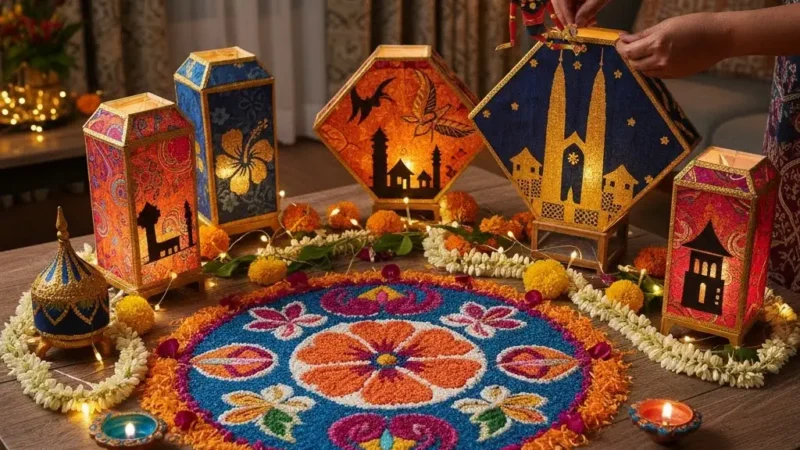
Use rice flour or colored sand to create rangoli patterns. For a Malaysian twist, incorporate motifs like the hibiscus flower, traditional batik patterns, or Malay wood carvings.
2. Batik Lanterns
Cut old batik fabric and wrap it around cardboard frames or glass jars. Insert tealights for a stunning cultural glow.
3. Temple-Inspired Lamp Pillars
Stack terracotta diyas on small steps or pillars decorated with jasmine and marigold. It’s an homage to Batu Caves’ grand staircase.
4. Eco-Friendly Marigold Garlands
Use real or paper marigolds to make hanging garlands. Combine with coconut leaves for a local touch.
5. Family Prayer Corner
Create a mini altar using brass lamps, idols, and sari cloth drapes. Add incense and flowers for authenticity.
Each project embodies Malaysian Deepavali history and culture, blending sustainability with beauty.
Safety and Sustainability Tips
- Use LED or battery-operated diyas for safety.
- Reuse fabrics and materials to reduce waste.
- Avoid synthetic glitters that harm the environment.
- Support local artisans and markets for your craft supplies.
Deepavali’s essence lies in purity and kindness—extending that to your décor makes your celebration more meaningful.
Where to Celebrate Deepavali in Malaysia
If you’re planning to experience Deepavali firsthand, here are top places for festive events and temple celebrations:
- Batu Caves (Selangor) – Grand prayers and festive stalls.
- Brickfields (Kuala Lumpur) – Street decorations, kolam contests, and bazaars.
- Little India (Penang & Ipoh) – Night markets and traditional performances.
- Johor Bahru Temples – Community-driven open houses and festive meals.
Each destination showcases Malaysian Indian festival celebrations at their finest, filled with light, music, and hospitality.
Conclusion
Deepavali in Malaysia is a celebration of light, love, and unity. With a mix of Indian tradition and Malaysian culture, DIY decorations bring a personalized and heartfelt touch to your home. Whether it’s a handmade kolam, a glowing batik lantern, or a temple-inspired altar, your creations will honor the timeless spirit of this festival.
By embracing these Deepavali traditions in Malaysia, you’re not just decorating—you’re preserving a cultural legacy that continues to inspire generations.


Comments are closed.