
Kunak

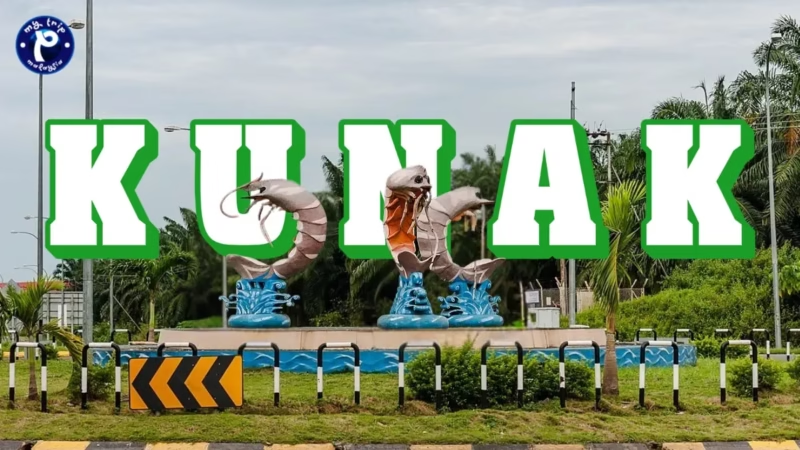
Nestled on the eastern edge of Sabah, Malaysia, Kunak is a tranquil town that offers a rich tapestry of natural beauty, historical intrigue, and cultural depth. Often overshadowed by its more famous neighbors like Semporna and Tawau, Kunak is a sanctuary for travelers seeking authentic experiences away from the usual tourist trail.
Kunak is situated in the East coast of Sabah and is under the Tawau Division, Located in the eastern part of Sabah, Malaysia. Uncover Kunak’s best with our MyTrip Travel Guide for October 2026. Top Kunak Parks & Nature Attractions, read reviews and information of parks, gardens & other nature attractions in Kunak, Malaysia on MyTrip Malaysia.
Location & Accessibility
Kunak serves as the administrative capital of the Kunak District in Sabah’s Tawau Division. Situated approximately 90 km southeast of Tawau and 150 km northeast of Semporna, it is well-connected by road. The town is accessible via the Lahad Datu–Kunak Highway, making it a convenient stopover for travelers heading to nearby attractions like Madai Cave or Darvel Bay.
How to Reach Kunak:
- By Car: Drive via the Lahad Datu–Kunak Highway; travel time from Tawau is about 1.5–2 hours.
- By Bus: Local bus services connect Kunak with Tawau and Lahad Datu.
- By Flight: The nearest airport is Tawau Airport, from where travelers can hire taxis or take a bus to Kunak.
History & Background
Kunak was part of the Borneo sultanates’ trade network and later influenced by British North Borneo Company administration during the colonial era. The area was originally inhabited by indigenous Kadazan-Dusun, Bajau, and Suluk communities, who practiced fishing, farming, and small-scale trade.
Kunak has a significant place in Sabah’s history. It is believed to be the site where Islam first arrived in the region, marking it as a cultural and religious landmark. Today, Kunak is recognized for its agriculture, local seafood, and as a gateway to the rich natural landscapes of eastern Sabah.
Additionally, remnants from the Japanese occupation during World War II can still be found in the area, adding layers to its historical narrative. Kunak has long been a hub for agriculture, especially palm oil and cocoa plantations, which continue to shape its economy today.
| Period | Events / Developments in Kunak |
|---|---|
| Pre-Colonial Era (Before 19th Century) | Inhabited by Kadazan-Dusun, Bajau, and Suluk communities; economy based on fishing, subsistence farming, and local trade. |
| 19th Century | Under influence of Sultanates of Sulu and Brunei; local trade networks expanded, including barter of marine and forest products. |
| Early 20th Century (1900s – 1940s) | Administered by British North Borneo Company; introduction of plantation crops (cocoa, palm oil); rural fishing and farming communities. |
| Post-WWII Era (1945 – 1960s) | Reconstruction after Japanese occupation; expansion of markets and basic infrastructure; growth in agriculture (rice, vegetables). |
| 1970s – 1980s | Development of cocoa and palm oil plantations; emergence of red chili cultivation; establishment of schools and health facilities. |
| 1990s – 2000s | Kunak officially became a district; growth in fishing, aquaculture, and small industries; improved local administration and roads. |
| 2010s – Present | Major red chili production center; growth of eco-tourism and agro-tourism; modernization of infrastructure, markets, and local businesses. |
Local Lifestyle & Culture
Kunak’s population is predominantly Bajau and Suluk, with a notable Chinese community engaged in local commerce and agriculture. The town’s cultural fabric is woven with traditional festivals, community gatherings, and a laid-back coastal lifestyle. Malay is the primary language spoken, though English and various Chinese dialects are also common. Visitors can often witness vibrant celebrations during Hari Raya, local cultural festivals, and fishing-related community events.
Attractions & Things to Do
1. Madai Cave
A massive limestone cave located within the Baturong Madai Forest Reserve, Madai Cave is home to swiftlets whose nests are harvested for bird’s nest soup. The cave’s historical significance dates back 20,000–30,000 years, with evidence of early human habitation and ancient burial sites.
2. Pantai Sarina Beach Recreation Center

Pantai Sarina Beach in Kunak, Sabah, Malaysia, is a captivating coastal destination known for its natural beauty and serene ambiance.
Address: Sarinah Beach Pangi, 91100 Kunak, Sabah, Malaysia
Phone: +60 10-266 6696
A serene coastal spot ideal for picnics, swimming, and enjoying the sunset. The clear waters and tranquil environment make it a favorite among locals and visitors alike.
3. Darvel Lagoon

Darvel Lagoon (also known as Darvel Lagoon Hampilan) is a restaurant and leisure spot in Malaysia. Darvel Lagoon is a great place to spend your holiday with friends and family. There is a mini fun fair inside the lagoon with a lot of games to choose from.
Address: Jalan Darvel Lagoon, Off, Jalan Sappang Scheme, Kampung Hampilan, 91207 Kunak, Sabah, Malaysia. Phone: +60 16-697 8689
A picturesque lagoon offering opportunities for kayaking, birdwatching, and photography. Its calm waters and surrounding mangroves provide a peaceful retreat.
4. Mount Madai
Mount Madai is an inselberg in Kunak District, Tawau Division, Sabah, Malaysia. The summit is 319 m above sea level. It has an approximate width 1 kilometre.

Mount Madai is an inselberg, which is an isolated hill or mountain rising abruptly from a flat or gently sloping landscape, located in the Kunak District of Sabah, Malaysia. The word “inselberg” is German for “island mountain” because it stands alone like an island in a sea of flatter land. Mount Madai’s summit is 319 meters (1,047 feet) above sea level.
Only two times in a year bird nest collected from the Madai Cave; April and October
5. Japanese War Tunnel

A mysterious tunnel believed to have been constructed during the Japanese occupation. Its exact purpose remains unclear, but it stands as a testament to the region’s complex history. Read more about the Japanese War Tunnel on mysabah.com
Ex Japanese administration office built in 1942 (during World War II) and located inside Mostyn oil palm plantation which belongs to Sime Darby.
Food & Local Cuisine
Kunak’s culinary scene is a delightful blend of Malay, Bajau, and Chinese influences. Must-try dishes include:
- Nasi Kuning: Fragrant yellow rice often served with fried chicken and sambal.
- Sotong Sumbat: Stuffed squid, a local delicacy.
- Dim Sum: Available in various eateries, reflecting the town’s Chinese heritage.
- Kunak is famous for its deer meat and chili paste. Source: MySabah.com
Local eateries and food stalls offer these dishes at affordable prices, providing an authentic taste of Kunak’s diverse culinary landscape.
Education
The town is served by several educational institutions:
- Secondary Schools: SMK Kunak, SMK Kunak Jaya, and SMK Madai.
- Primary Schools: SRJK(C) Pai Sheng (Chinese-medium), SK Kunak 1, SK Kunak Jaya, and SK Ladang Binuang (Malay-medium).
Additionally, a resettlement scheme for Cocos Islanders is situated near the Giram Oil Palm Estate
Kunak Climate Summary
Located at an elevation of 10.27 meters (33.69 feet) above sea level, Kunak has a Tropical rainforest climate (Classification: Af). The district’s yearly temperature is 28.27ºC (82.89ºF) and it is -0.01% lower than Malaysia’s averages. Kunak typically receives about 95.37 millimeters (3.75 inches) of precipitation and has 213.24 rainy days (58.42% of the time) annually.
| Country | Malaysia |
| City | Sabah |
| Longitude | 118.2511462 |
| Latitude | 4.686116 |
| Attitude/Elevation | 10.27m (33.69ft) |
| Local time | Thursday 10:23 |
| Annual high temperature | 29.37ºC (84.87ºF) |
| Annual low temperature | 26.33ºC (79.39ºF) |
| Warmest month | May (30.03ºC / 86.05ºF) |
| Coldest Month | February (25.37ºC / 77.67ºF) |
| Wettest Month | June (137.85mm / 5.43in) |
| Driest Month | February (44.85mm / 1.77in) |
| Number of days with rainfall (≥ 1.0 mm) | 213.24 days (58.42%) |
| Days with no rain | 151.76 days (41.58%) |
| Humidity | 77.65% |
Accommodation Options
While Kunak is not a major tourist hub, it offers a range of accommodations to suit different budgets:
- Budget: Simple guesthouses and homestays providing basic amenities.
- Mid-range: Local hotels offering comfortable stays with essential services.
- Luxury: Nearby towns like Tawau and Semporna have resorts and higher-end hotels.
Shopping & Souvenirs
Kunak’s markets are perfect for picking up local handicrafts and souvenirs:
- Handwoven Mats: Traditional Bajau mats made from pandan leaves.
- Local Spices: Aromatic spices used in local cooking.
- Handicrafts: Wooden carvings and woven items reflecting the indigenous culture.
Kunak’s Red Chili Cultivation: Key Facts
Kunak, a district in Sabah, Malaysia, is renowned for its red chili cultivation, producing some of the region’s most sought-after chili peppers.
- Agricultural Significance: Kunak is a district in the Tawau Division of Sabah, Malaysia, known for its agricultural activities, including the cultivation of red chili peppers.
- Momporok Chilli: Kunak is renowned for its unique and aromatic Momporok chilli variety
- Chili Varieties: The region produces various chili varieties, contributing to local cuisine and markets.
- Climate and Soil Conditions: Kunak’s tropical climate and fertile soil provide suitable conditions for chili cultivation.
- Economic Role: Chili farming in Kunak supports local farmers and contributes to the district’s economy.
- Culinary Use: Red chilies from Kunak are utilized in traditional dishes and local sauces, enhancing the flavor profile of Malaysian cuisine.
Nearby Places to Visit
- Semporna: Famous for diving spots and proximity to the Tubbataha Reefs.
- Lahad Datu: Gateway to Danum Valley, a conservation area rich in biodiversity.
- Tawau: Known for cocoa plantations and Tawau Hills Park.
Travel Tips
- Best Time to Visit: The dry season from March to October.
- Safety: Kunak is generally safe for tourists, but staying updated on local news is advisable.
- Cultural Etiquette: Dress modestly and respect local customs, especially when visiting religious sites.
Why Visit Kunak?
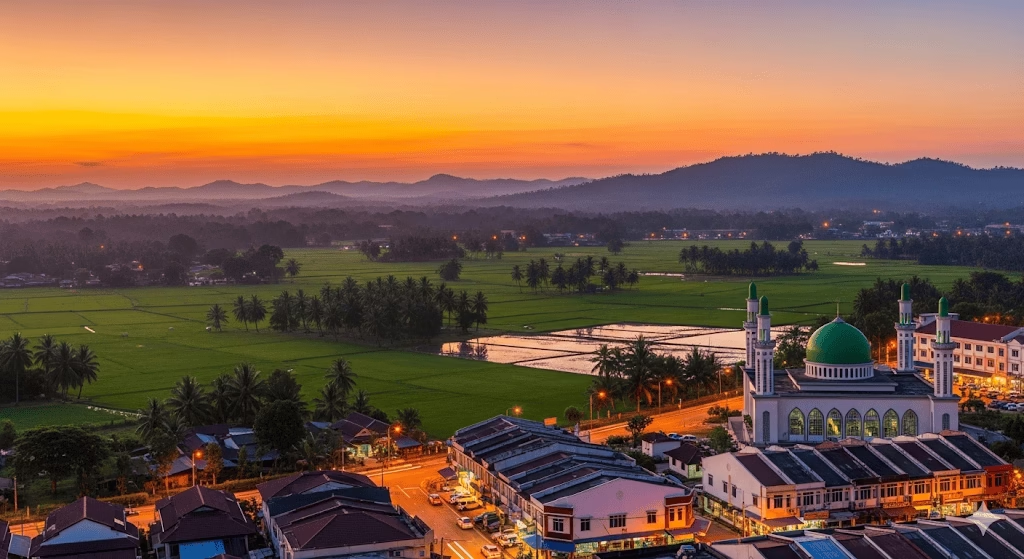
Kunak offers a unique blend of natural beauty, rich history, and vibrant culture. Whether exploring ancient caves, relaxing on pristine beaches, or savoring local delicacies, Kunak provides an authentic Malaysian experience away from typical tourist crowds. Its strategic location also makes it a convenient base for exploring Sabah’s surrounding regions.



Comments are closed.