
Melbourne Airport

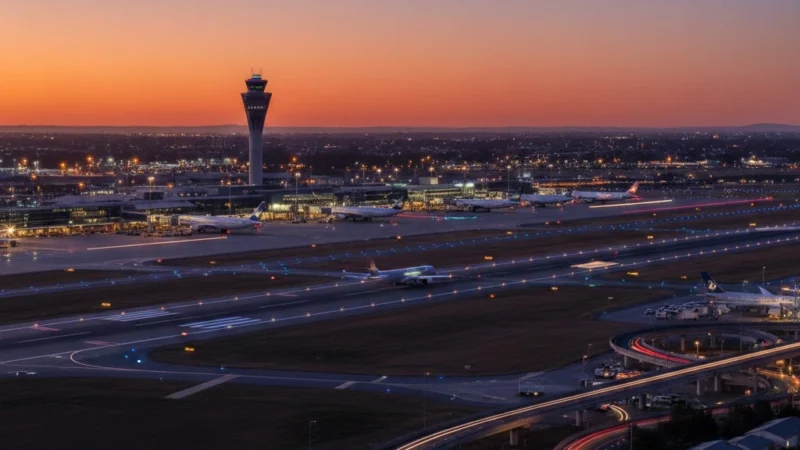
Melbourne Airport (IATA: MEL, ICAO: YMML), also known as Tullamarine Airport, is the primary airport serving Melbourne, the capital of Victoria, Australia. It is the second-busiest airport in Australia by passenger traffic and acts as the main gateway for both domestic and international flights in the region. The airport is located approximately 23 kilometers (14 miles) northwest of Melbourne’s Central Business District (CBD), in the suburb of Tullamarine.
History
Melbourne Airport opened in 1970 to replace Essendon Airport as the city’s main airport. Designed to meet the growing demand for both domestic and international flights, it has since undergone numerous expansions, including terminal upgrades, new runways, and modern passenger facilities.
Terminals
Melbourne Airport has four terminals serving domestic and international flights:
Terminal 1 (T1)
- Serves primarily Qantas domestic flights.
- Offers check-in counters, lounges, dining, and shopping options.
Terminal 2 (T2)
- Serves regional and some low-cost domestic carriers.
- Facilities include check-in counters, limited shops, and dining options.
Terminal 3 (T3)
- Hosts Virgin Australia and Jetstar domestic flights.
- Includes lounges, retail, dining, and passenger services.
Terminal 4 (T4)
- The main international terminal for non-Qantas/Virgin airlines.
- Features passport control, customs, duty-free shopping, lounges, and dining.
Airlines and Destinations
Melbourne Airport connects to major Australian cities like Sydney, Brisbane, Adelaide, Perth, and Hobart. Internationally, it serves destinations in Asia, Europe, North America, and the Middle East. Key airlines include:
- Qantas
- Virgin Australia
- Jetstar
- Emirates
- Singapore Airlines
- Cathay Pacific
- British Airways
- Qatar Airways
- Air New Zealand
- Thai Airways
How to Reach Melbourne Airport
By SkyBus
The SkyBus Melbourne City Express offers direct transfers between Melbourne CBD (Southern Cross Station) and the airport:
- Departure every 10 minutes.
- Operates 24 hours a day.
- Dedicated luggage storage and free Wi-Fi onboard.
Additional SkyBus routes operate from:
- St Kilda
- Southbank Docklands
- Frankston
- Western suburbs
By Public Bus
Regular Public Transport Victoria (PTV) buses connect the airport to nearby suburbs:
- Route 901 SmartBus (Frankston to Melbourne Airport).
- Route 478 & 479 (Airport West – Melbourne Airport).
- Route 482 (Sunbury – Airport).
Passengers can connect to tram and train lines through these routes.
By Taxi
- Taxis are available at dedicated ranks outside all terminals.
- The fare from Melbourne CBD typically ranges from AUD 55–70, depending on time and traffic.
By Rideshare
Uber, Ola, and DiDi operate from designated rideshare pickup areas:
- T2 & T4: Level 2 pickup zones.
- Clear signage is available throughout terminals.
By Car
Convenient access via M2 Tullamarine Freeway and M80 Western Ring Road.
Multiple parking options:
- Terminal Parking
- Long-Term Parking
- Value Car Park
- Premium/Valet Services
By Rental Car
Major rental companies operate counters in all terminals, including:
- Hertz
- Avis
- Budget
- Europcar
- Thrifty
- Enterprise
Facilities and Services
The airport provides a wide range of amenities:
- Lounges: Qantas, Virgin Australia, and independent lounges.
- Shopping: Duty-free, retail, and souvenir shops.
- Dining: Cafes, restaurants, and fast-food outlets.
- Transport: Car rentals, taxis, rideshares, and buses.
- Accessibility: Wheelchair access, hearing loop systems, and assistance for passengers with reduced mobility.
- Wi-Fi: Free and paid Wi-Fi across terminals.
- Medical: On-site first aid and emergency facilities.
Ground Transportation
Road
Connected via the M2 Tullamarine Freeway and Melbourne Airport Link, with options for short-term, long-term, and premium parking.
Public Transport
- SkyBus: 24-hour express service to Melbourne CBD.
- Public Buses: Local routes connect to nearby suburbs.
- Taxis and Rideshare: Designated pickup points at each terminal.
Rail
Currently no direct train link exists, but the Melbourne Airport Rail Link is planned for future connectivity.
Passenger Traffic
The airport handles over 40 million passengers annually, accommodating both domestic short-haul and long-haul international flights, alongside cargo and freight operations.
Safety and Security
- Customs and Immigration: Efficient passport control and customs facilities.
- Security Screening: Comprehensive checks for passengers and luggage.
- Emergency Services: On-site police, fire, and medical teams.
Expansion and Future Plans
Melbourne Airport is undergoing ongoing expansion:
- Terminal upgrades and additional gates.
- Improved lounges and amenities.
- Melbourne Airport Rail Link for direct city connectivity.
- Enhanced parking and ground transport facilities.
Nearby Amenities
Several hotels and shopping centers are within 10–15 minutes:
- Pullman Melbourne Airport
- Holiday Inn Melbourne Airport
- Parkroyal Melbourne Airport
Conclusion
Melbourne Airport is a major aviation hub that efficiently serves millions of domestic and international travelers every year. With its modern terminals, extensive airline network, comprehensive facilities, and planned future expansions, it continues to be a convenient, safe, and traveler-friendly gateway to Melbourne and beyond. Whether traveling for business, leisure, or connecting flights, Melbourne Airport offers a seamless experience supported by a wide range of services, transport options, and amenities for all passengers.



Comments are closed.